 Euro
Euro
 British Pound

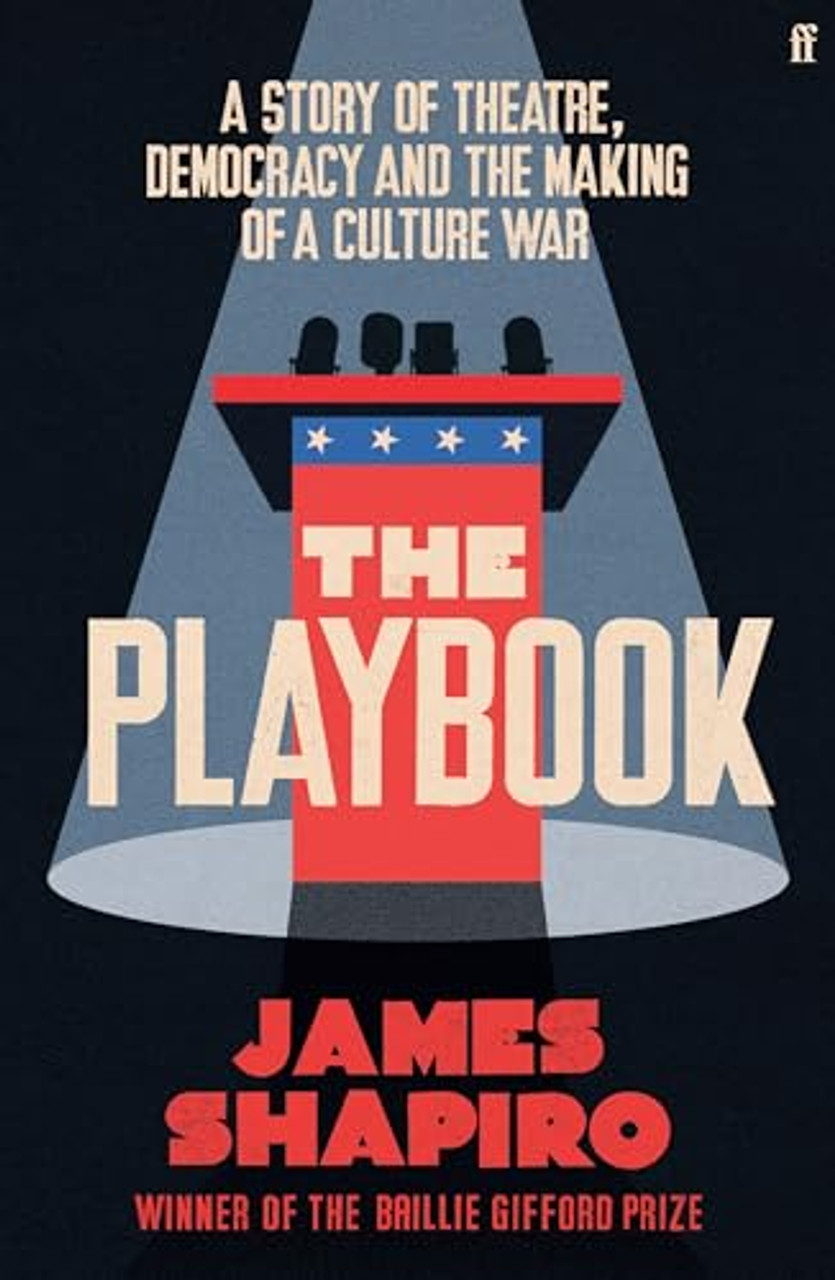

Product Description
A brilliant and daring new cultural history about the origins of today’s vicious and intractable culture wars by the acclaimed Shakespeare scholar James Shapiro
From 1935 to 1939, the Federal Theater Project staged over a thousand productions in 29 states that were seen by thirty million (or nearly one in four) Americans, two thirds of whom had never seen a play before. At its helm was an unassuming theater professor named Hallie Flanagan. Some of the twelve thousands people it employed, such as Orson Welles and Arthur Miller, would go on to become artistic titans of the Twentieth Century. But many were ordinary people thrilled at the chance to ply their trades and earn a living during the Great Depression. The Federal Theater Project was the product of a moment when the arts, no less than industry and agriculture, were thought to be vital to the health of the republic, bringing Shakespeare to the public, alongside plays that offered biting commentary on the issues of the day—from housing and public health, to the rising threat of fascism and white supremacy.
But this once thriving Works Progress Administration relief program did not survive, and in fact has left little trace—save for its cause of death. The Federal Theater program was the first New Deal project to be attacked and ended on the grounds that it promoted “un-American” activity, thus sowing the seeds not just for the McCarthy era, in which anyone with even the faintest hint of communist leaning could be hounded out of public life, but indeed our own modern era of merciless polarization and wedge issue politics. This was a turning point in American cultural life, and a hammer blow against democracy—for, as Shapiro brilliantly argues, “the health of democracy and theater, twin born in ancient Greece, have always been mutually dependent.”
The firing of the starter pistol for the Culture Wars is often located in the 1960s with the Vietnam War and the Civil Rights movement. But Shapiro shows that these battles, prioritizing identity over policy, began much earlier—and they did not begin by accident. Largely forgotten until now, it was an ambitious and devious congressman from East Texas, Martin Dies, who was appointed chairman of the first House un-American Committee, and thus pioneered a conversative political playbook now so prevalent that it seems eternal.
This book is second hand, and while you may not get the same publication/version/reprint/edition shown in the picture it will be the same author and title.
Removing existing stickers from a second hand book may damage it, so we refrain from doing so.
Even if the picture shows no price stickers on the book they may be there on the copy you receive.
All of our books are in very good condition.
Please be aware that there will be a sticker with an identifying number on the spine of this book.


