Euro
Euro
 British Pound



Product Description
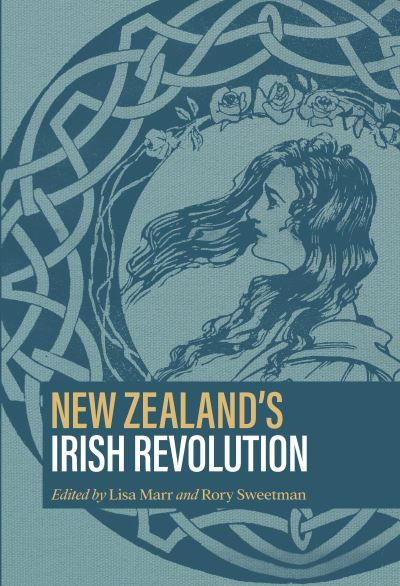
Offering original New Zealand perspectives on the Irish Revolution from the third Home Rule crisis to the establishment of the Irish Free State, this collection explores the political, social, and cultural evolution of Ireland from 1912 to 1923.
Interrogating rare and previously untouched primary sources, the contributors capture an array of New Zealand outlooks, from the experiences of soldiers who visited Ireland during World War I to the views of local Irish nationalists. New Zealand’s contribution to the global movement for self-determination for Ireland and its participation in the Irish Race Congress in Paris are explored. Reflections on the poets of the Easter Rising, engagements with Irish modernists, and the impact of Cumann na nGaedheal and Cumann na mBan are investigated. Shifts during the decade in the associational life of Irish migrants, their children and grandchildren are analysed. Cultural memory is illuminated in an account of how a Catholic newspaper fostered a collective understanding of Irish history and contemporary events.
New Zealand’s Irish Revolution examines the dominion’s relationship with Ireland, discussing notions of ‘home’, diaspora, identity, and belonging, and reveals new details about the lives and ideas of Irish residents and their descendants. A fresh and thought-provoking collection that will enhance our understanding of the Irish Revolution and its broader international impact through an Antipodean lens.
Lisa Marr has taught in the Irish Studies programme at the University of Otago. Her research explores the way Irish history and literature intersect in the lives of New Zealanders. Her publications include the co-edited book New Zealand’s Responses to the 1916 Rising (2020).
Rory Sweetman is a Kildare-born New Zealander who holds history degrees from Trinity College Dublin and Cambridge University. He has published extensively on the Irish abroad and recently completed a history of the Loyal Orange Institution in New Zealand.
Reviews
‘A significant contribution to both the history of the Irish diaspora and the global aspects of the Irish Revolution.’
– Brian Hanley, Assistant Professor in the History of Northern Ireland, Trinity College Dublin
‘An informative – and potentially impactful – volume.’
– Professor Darragh Gannon, Associate Director of Global Irish Studies, Georgetown University